
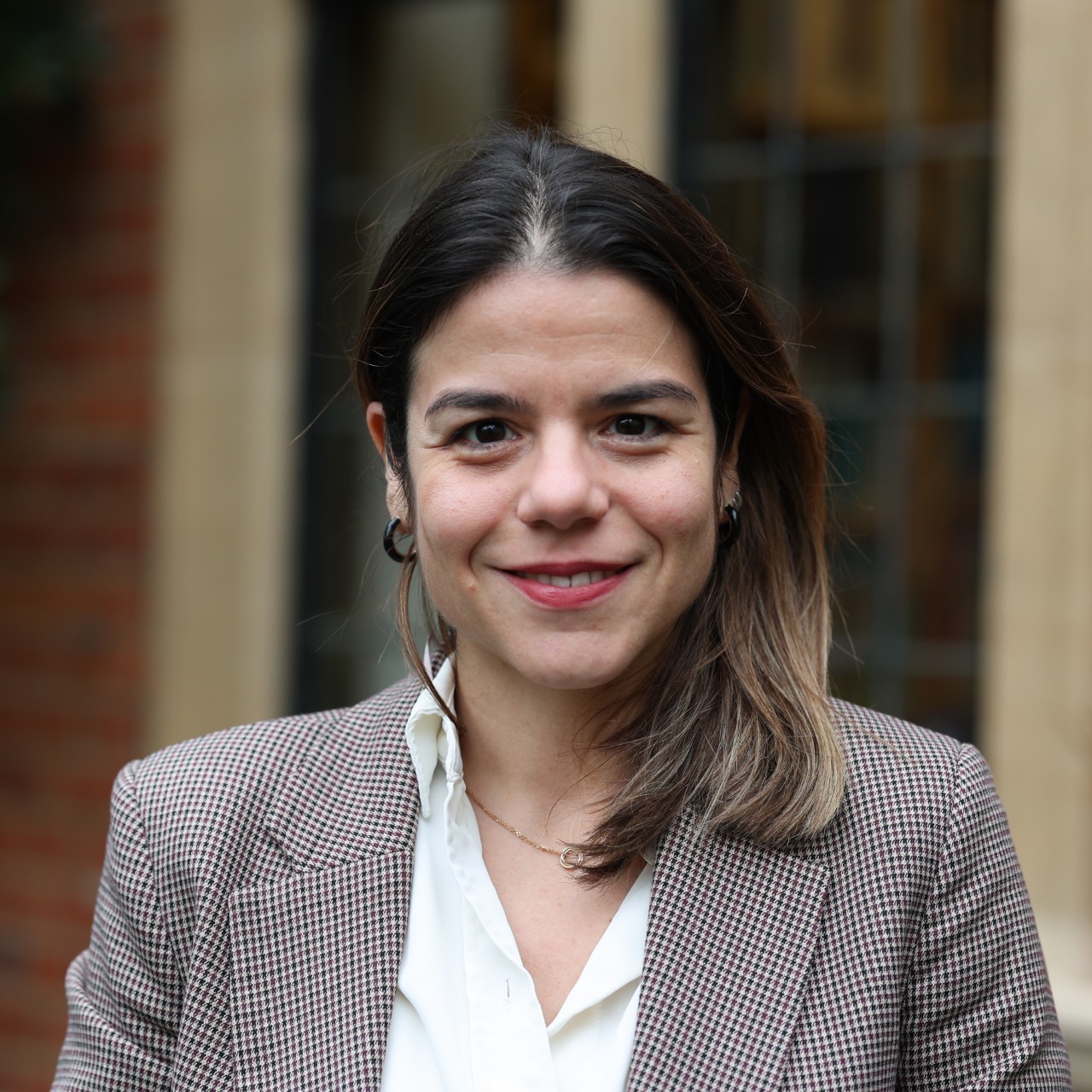
Konstantina Vogiatzaki leads the Cryogenic Fluid Dynamics Lab, where her group develops computational, machine-learning and digital-twin methods for cryogenic and multiphase fluid systems that are central to net zero energy technologies. Cryogenics are a backbone technology for many net-zero pathways, including liquid hydrogen for aviation and heavy transport, cryogenic energy storage, superconducting systems, space propulsion, low-temperature carbon capture and high-performance thermal management for electronics and data centres. Professor Vogiatzaki combines high-fidelity simulation, supercomputer-generated datasets and AI to accelerate the safe deployment of these technologies.
Overall, her research sits at the interface of energy, artificial intelligence, computational fluid dynamics and high-performance computing. She develops physics-based and data-driven models for complex thermo-fluid processes including turbulence, heat transfer, phase change, sprays, droplets, reactive flows, real-fluid thermodynamics and supercritical flows. Her work supports the design and optimisation of low-carbon energy and propulsion systems, with applications in hydrogen safety, cryogenic hydrogen storage and refuelling, liquid-air and cold-energy storage, carbon capture, advanced cooling, alternative fuels and net-zero transport.
She has authored more than 200 publications in energy-related topics and has contributed to major UK and international research initiatives in hydrogen, cryogenic fluids, carbon capture, energy storage, clean propulsion and AI-enabled optimisation. She is also a Tutorial Fellow in Engineering Science at Somerville College. Her research has been supported by EPSRC, UKRI, the European Union, university funding and industrial collaborations across the aerospace, maritime, automotive, power and energy sectors.